7 Ways ERP Software Solutions Transform Business Operations
 ERP
ERPIntroduction
In today's competitive business landscape, ERP software solutions have become essential tools for organizations seeking operational excellence. Enterprise Resource Planning systems integrate core business processes into a unified platform, enabling seamless data flow across departments. As businesses face increasing complexity in managing finances, inventory, human resources, and customer relationships, implementing the right ERP solutions can be the difference between stagnation and growth. This blog explores how modern ERP systems revolutionize business operations and provides actionable insights for successful implementation.
Key Takeaways
ERP software solutions centralize business data, eliminating silos and improving decision-making across departments.
Organizations implementing ERP systems experience up to 50% reduction in operational costs and significant productivity gains.
Successful ERP deployment requires strategic planning, employee training, and alignment with business objectives for maximum ROI.
What Are ERP Software Solutions?
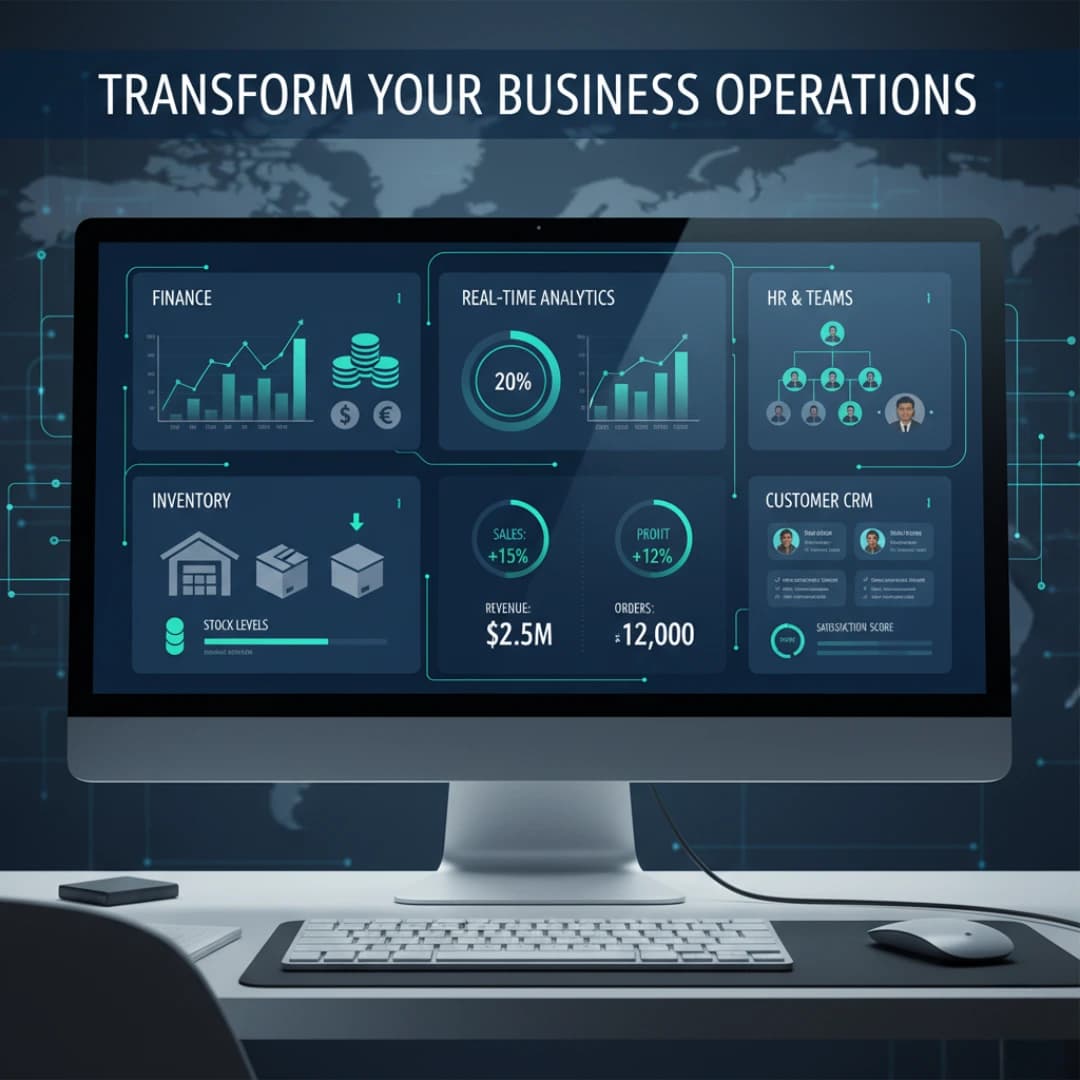
ERP software solutions integrate all fundamental business processes into one comprehensive system. These platforms connect finance, supply chain, manufacturing, human resources, and customer management functions, creating a single source of truth for organizational data.
Modern ERP solutions go beyond basic data management. They incorporate advanced analytics, artificial intelligence, and cloud capabilities to provide real-time insights. Companies using ERP systems can monitor inventory levels, track financial performance, manage employee schedules, and analyze customer behavior from one centralized dashboard. For businesses seeking comprehensive technology integration, Codex ITNS offers specialized IT consulting services that align ERP implementations with organizational goals. According to industry research, 95% of businesses report improved processes after implementing ERP systems, demonstrating their transformative potential across industries.
1. Streamlined Business Processes and Automation
ERP software solutions eliminate redundant tasks by automating workflows across departments. Automation reduces manual data entry, minimizes errors, and accelerates routine operations like invoice processing, purchase orders, and report generation.
When finance teams process invoices manually, the average cost per invoice reaches $15-20. ERP automation reduces this to under $5 while cutting processing time by 70%. Sales teams benefit from automated quote generation, inventory checks happen in real-time, and HR departments streamline payroll calculations. Integration technologies provided by Codex ITNS ensure seamless connectivity between ERP systems and existing business applications. Manufacturing companies using ERP solutions report 25% faster production cycles as automated work orders flow directly from sales to production floors. This automation frees employees to focus on strategic initiatives rather than repetitive administrative tasks.
2. Enhanced Data Visibility and Real-Time Reporting
Real-time data access transforms how organizations make critical business decisions. ERP systems provide instant visibility into operational metrics, financial performance, and resource utilization across all departments simultaneously.
Traditional systems force managers to wait days or weeks for consolidated reports. Modern ERP solutions deliver live dashboards displaying key performance indicators, inventory levels, cash flow status, and production metrics. Executives can identify bottlenecks immediately and respond to market changes within hours instead of weeks. Companies with real-time ERP reporting capabilities experience 35% faster decision-making processes. For example, retail businesses monitor sales patterns across multiple locations instantly, adjusting inventory distribution before stockouts occur. Financial teams track expenses against budgets in real-time, preventing cost overruns. This transparency creates accountability and enables proactive management rather than reactive problem-solving.
Key Benefits of Real-Time Reporting:
Instant access to financial statements and profitability analysis
Live inventory tracking across warehouses and retail locations
Real-time production monitoring and resource allocation
Immediate identification of supply chain disruptions
Up-to-the-minute customer order status and fulfillment tracking
3. Improved Financial Management and Compliance
ERP software solutions revolutionize financial operations by centralizing accounting, budgeting, and compliance functions. Integrated financial modules ensure accuracy, reduce audit risks, and maintain regulatory compliance across multiple jurisdictions.
Finance teams managing separate accounting systems face data inconsistencies, reconciliation challenges, and compliance vulnerabilities. ERP platforms unify general ledger, accounts payable, accounts receivable, and financial reporting into one system. This integration reduces month-end closing time from 10-15 days to 3-5 days. Organizations in regulated industries particularly benefit as ERP systems automatically apply accounting standards, maintain audit trails, and generate compliance reports. Codex ITNS's financial accounting solutions integrate seamlessly with ERP platforms to strengthen financial controls. Tax calculations update automatically based on current regulations, and multi-currency transactions process accurately without manual intervention. Companies report 60% reduction in accounting errors after implementing ERP solutions.
4. Optimized Inventory and Supply Chain Management
Effective inventory control through ERP solutions prevents stockouts while minimizing carrying costs. Integrated supply chain management provides end-to-end visibility from procurement through delivery, optimizing the entire logistics network.
Businesses lose billions annually due to poor inventory management—either tying up capital in excess stock or losing sales from stockouts. ERP software solutions use demand forecasting algorithms, analyzing historical sales data, seasonal patterns, and market trends to optimize inventory levels. Automated reorder points trigger purchase orders when stock reaches predetermined thresholds. Distribution centers coordinate seamlessly as the system tracks goods movement across locations. Codex ITNS's inventory management expertise helps businesses maximize ERP capabilities for supply chain optimization. Manufacturing companies benefit from material requirements planning (MRP) that calculates exact component needs based on production schedules. This precision reduces inventory costs by 20-30% while improving order fulfillment rates to 98% or higher.
Supply Chain Optimization Features:
Automated demand forecasting and inventory replenishment
Real-time tracking of goods across the supply chain
Vendor performance monitoring and procurement analytics
Multi-warehouse coordination and transfer optimization
Integration with shipping carriers for automated logistics
5. Enhanced Customer Relationship Management
Integrating CRM functionality within ERP solutions creates comprehensive customer intelligence. Sales teams access complete customer histories including orders, support tickets, payment status, and communication logs from a single interface.
Disconnected systems prevent sales representatives from understanding complete customer relationships. When CRM data exists separately from order management and accounting, opportunities slip through gaps. ERP-integrated CRM provides 360-degree customer views—sales teams see pending quotes, finance teams monitor payment histories, and support teams access product usage data simultaneously. Codex ITNS's CRM solutions leverage this integration to enhance customer experiences and drive revenue growth. This unified approach increases sales conversion rates by 29% as representatives identify upselling opportunities based on purchase patterns. Customer service improves dramatically when support agents instantly access order status, warranty information, and previous interactions. Companies with integrated ERP-CRM systems report 42% higher customer retention rates.
6. Scalable Infrastructure for Business Growth
Modern ERP software solutions grow alongside your organization without requiring complete system overhauls. Cloud-based ERP platforms offer flexibility to add users, modules, and locations as business needs evolve.
Traditional on-premise ERP systems required expensive hardware upgrades and lengthy implementation projects for expansion. Today's cloud ERP solutions scale instantly, adding new users takes minutes, not months. Companies entering new markets deploy ERP functionality to international locations remotely, ensuring consistent processes worldwide. Multi-currency support, localization for regional regulations, and language adaptability come standard in modern systems. Small businesses start with core modules like accounting and inventory, then add manufacturing, HR, or e-commerce capabilities as they grow. This modular approach reduces initial investment while ensuring future-ready infrastructure. Organizations using scalable ERP solutions expand 50% faster than competitors limited by legacy systems, as technology no longer constrains growth strategies.
7. Strengthened Data Security and Business Continuity
Enterprise-grade security built into ERP systems protects sensitive business data from threats and breaches. Role-based access controls, encryption, and automated backups ensure data integrity while maintaining business continuity.
Data breaches cost businesses an average of $4.45 million per incident. ERP software solutions implement multiple security layers including user authentication, activity logging, and granular permission settings. Employees access only information relevant to their roles—finance teams see financial data while sales teams view customer information, preventing unauthorized access. Cloud ERP providers invest heavily in cybersecurity infrastructure that individual companies cannot match internally. Automated backup systems ensure business continuity even during disasters, with recovery times measured in hours rather than days. According to external research from the Cybersecurity & Infrastructure Security Agency, organizations with robust ERP security frameworks experience 70% fewer data incidents. Audit trails track every system change, supporting compliance requirements and forensic investigations when needed.
Security Features of Modern ERP Solutions:
Multi-factor authentication and role-based access controls
End-to-end data encryption for transmission and storage
Automated backup and disaster recovery capabilities
Real-time security monitoring and threat detection
Compliance support for GDPR, SOX, and industry regulations
Choosing the Right ERP Implementation Partner
Successful ERP deployment depends on experienced implementation partners who understand both technology and business processes. The right partner conducts thorough needs assessments, customizes solutions to specific requirements, and provides comprehensive training and support.
ERP implementation failure rates reach 60-70% when organizations lack proper guidance. Common pitfalls include inadequate planning, insufficient training, and poor change management. Expert partners like Codex ITNS bring proven methodologies that minimize risks and ensure smooth transitions. The implementation process begins with business process mapping, identifying inefficiencies in current workflows. Partners configure ERP systems to match organizational needs rather than forcing businesses to adapt to rigid software. Comprehensive training programs ensure employees understand new processes, and ongoing support addresses issues as they arise. Companies working with experienced ERP partners achieve full system adoption within 6-9 months compared to 18-24 months for self-implementations, accelerating return on investment.
Conclusion
ERP software solutions represent strategic investments that transform operational efficiency, enhance decision-making, and position organizations for sustainable growth. From streamlined automation and real-time visibility to optimized supply chains and strengthened security, modern ERP systems address critical business challenges across industries. As digital transformation accelerates, implementing robust ERP solutions becomes essential for maintaining competitive advantage. The key to success lies in choosing scalable platforms, partnering with experienced implementers, and committing to comprehensive change management. Organizations ready to modernize their operations should evaluate ERP options that align with their growth objectives and industry requirements.
Ready to transform your business operations with enterprise-grade ERP solutions? Partner with Codex for reliable implementation, integration, and support that drives measurable results. Contact us today to discuss your ERP needs and discover how we can help you achieve operational excellence.
Frequently Asked Questions
What are ERP software solutions?

How do ERP software solutions improve business operations?
What industries benefit most from ERP solutions?
How much does ERP software implementation cost?
Can small businesses afford ERP systems?
What's the difference between ERP and accounting software?
How long does ERP implementation typically take?
What are the biggest challenges in ERP implementation?
Can ERP systems integrate with existing business software?
What ROI can companies expect from ERP software solutions?