Enterprise Software Solutions: 5 Strategies to Boost Efficiency
 ERP
ERPIntroduction
Enterprise software solutions have become the backbone of modern business operations, enabling organizations to streamline processes, enhance productivity, and maintain competitive advantage. As businesses grow, managing multiple departments, data streams, and customer interactions becomes increasingly complex. The right software infrastructure can transform how your organization operates, from automating routine tasks to providing real-time insights for strategic decision-making. Whether you're looking to upgrade legacy systems or implement integrated platforms, understanding enterprise software solutions is crucial for sustainable growth. This guide explores how these powerful tools reshape business operations and drive measurable results.
Key Takeaways
Enterprise software solutions integrate core business functions into unified platforms, eliminating data silos and improving operational efficiency across departments.
Modern enterprise systems offer scalability, automation, and real-time analytics that help businesses in the UAE adapt quickly to market changes and customer demands.
Successful implementation requires strategic planning, stakeholder buy-in, and partnership with experienced IT consulting providers who understand your industry's unique challenges.
What Are Enterprise Software Solutions?
Enterprise software solutions are comprehensive, integrated platforms designed to manage and automate core business processes across multiple departments, including finance, human resources, inventory, sales, and customer relationship management, enabling organizations to operate more efficiently and make data-driven decisions.
These sophisticated systems differ from standard business software by offering scalability, customization, and integration capabilities that serve entire organizations rather than individual departments. Enterprise software solutions in UAE have gained significant traction as businesses seek to digitize operations and compete in global markets. Unlike off-the-shelf applications, enterprise platforms can be tailored to specific industry requirements and business models. They typically include modules for financial accounts management, inventory tracking, customer relationship management, and human resources. The integration of these modules ensures seamless data flow across departments, eliminating manual data entry, reducing errors, and providing leadership with comprehensive visibility into business performance. This holistic approach transforms disconnected processes into a unified, efficient operational framework.
Key Benefits of Implementing Enterprise Software Solutions
Organizations implementing enterprise software solutions experience improved operational efficiency, reduced costs, enhanced data security, better decision-making capabilities, and increased agility, all of which contribute to competitive advantage and sustainable growth in today's digital economy.
The transformation begins with process automation, where repetitive tasks like invoicing, reporting, and data entry are handled automatically, freeing employees for strategic work. Real-time analytics provide actionable insights into sales trends, inventory levels, and customer behavior, enabling proactive decision-making. Enterprise systems also strengthen cybersecurity by centralizing data management and implementing consistent security protocols across all touchpoints. For businesses operating in competitive markets, the ability to quickly adapt to changing conditions becomes a significant differentiator. Integrated procurement and inventory management modules optimize supply chain operations, reducing waste and improving cash flow. Additionally, cloud-based enterprise solutions offer flexibility for remote work and global collaboration, essential features in today's distributed business environment. These combined benefits translate directly into improved profitability and market positioning.
Key Statistics:
Organizations report up to 40% improvement in operational efficiency after implementing enterprise software
Companies experience 25-35% reduction in operational costs through process automation
78% of businesses see improved decision-making capabilities within the first year
Enterprise software adoption reduces data entry errors by up to 90%
Popular Types of Enterprise Software Solutions
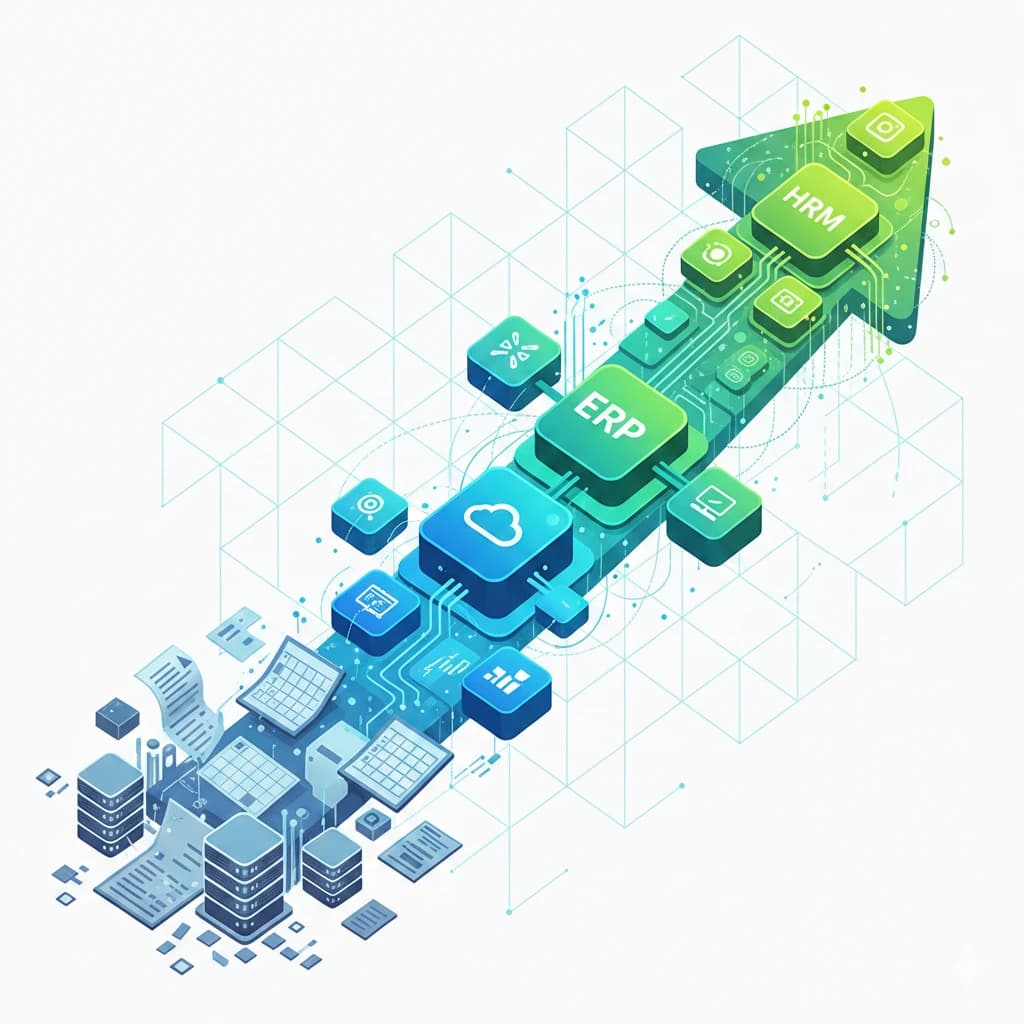
The enterprise software landscape includes ERP (Enterprise Resource Planning), CRM (Customer Relationship Management), HRM (Human Resource Management), SCM (Supply Chain Management), and specialized industry-specific platforms, each addressing distinct business needs while integrating seamlessly with other systems.
ERP systems serve as the central nervous system of enterprise operations, integrating finance, inventory, manufacturing, and distribution processes. Companies like Odoo offer modular ERP solutions that businesses can customize based on specific requirements. CRM platforms manage customer interactions, sales pipelines, and marketing campaigns, providing 360-degree customer visibility. HRM solutions streamline recruitment, payroll, performance management, and employee development. For retail and hospitality businesses, point-of-sale systems integrate with inventory and accounting modules for real-time transaction processing. E-commerce platforms enable online selling while synchronizing with backend systems. Manufacturing-focused enterprises benefit from specialized manufacturing execution systems that optimize production workflows. The key advantage lies in selecting solutions that integrate effectively, creating a cohesive technology ecosystem rather than isolated applications. According to Gartner research, businesses using integrated enterprise suites report 45% faster implementation times compared to best-of-breed approaches.
Critical Factors for Successful Implementation
Successful enterprise software implementation depends on thorough needs assessment, stakeholder engagement, phased rollout strategies, comprehensive training programs, and ongoing support from experienced technology partners who understand both the software capabilities and your business objectives.
The implementation journey begins with conducting a detailed business process audit to identify pain points, inefficiencies, and integration requirements. Leadership buy-in is essential, as enterprise software adoption affects every department and requires organizational change management. Rather than attempting a complete system overhaul simultaneously, successful organizations adopt phased implementation approaches, starting with critical modules and gradually expanding functionality. Employee training cannot be underestimated—users must understand not just how to operate the software but why it benefits their daily work. Partnering with experienced providers who offer software design development expertise ensures customization aligns with business processes rather than forcing processes to fit software limitations. Post-implementation support, including system monitoring, updates, and user assistance, determines long-term success. Organizations should also establish clear metrics to measure ROI and system performance against initial objectives.
Enterprise Software Solutions in UAE: Market Landscape
The UAE's digital transformation initiatives have accelerated enterprise software adoption across industries, with businesses seeking cloud-based, AI-enabled solutions that support ambitious growth objectives and comply with evolving regulatory requirements.
UAE businesses face unique considerations when selecting enterprise software solutions, including multi-currency support, Arabic language capabilities, and compliance with local tax regulations and data sovereignty laws. The government's Vision 2030 and various smart city initiatives have created a favorable environment for digital adoption. Industries such as logistics, retail, healthcare, and manufacturing are investing heavily in integrated platforms that enable real-time visibility and agile operations. Cloud adoption has surged as organizations recognize the benefits of reduced infrastructure costs, automatic updates, and enhanced disaster recovery capabilities. According to IDC research, UAE enterprise software spending is projected to grow at 12% annually through 2026, driven by AI integration, process automation, and the need for scalable solutions supporting rapid business expansion.
Conclusion
Enterprise software solutions represent a strategic investment in operational excellence and future readiness. By integrating core business functions, automating processes, and providing actionable insights, these platforms enable organizations to respond quickly to market opportunities and challenges. Success requires careful planning, selecting the right technology partner, and commitment to organizational change. For businesses in the UAE seeking to enhance efficiency and competitiveness, enterprise software solutions offer a clear path forward. Partner with experienced providers who understand your industry and can deliver customized solutions aligned with your strategic objectives. Ready to transform your operations? Explore how integrated technology can drive your business forward.
Frequently Asked Questions
What are enterprise software solutions?

Enterprise software solutions are integrated platforms that manage core business functions like finance, HR, inventory, and CRM across organizations. They automate processes, centralize data, and provide real-time insights, helping businesses improve efficiency and decision-making.
How do enterprise software solutions boost business efficiency?
Enterprise software solutions automate repetitive tasks, eliminate data silos, and streamline workflows across departments. They reduce manual errors, accelerate processes, and provide real-time visibility into operations, typically delivering 30-40% efficiency improvements.
What types of enterprise software solutions are available?
Common types include ERP systems, CRM platforms, HRM software, supply chain management tools, and specialized solutions for manufacturing, retail, and services. Each addresses specific business needs while integrating with other systems.
Are enterprise software solutions suitable for UAE businesses?
Yes, enterprise software solutions in UAE support multi-currency operations, Arabic language, and local tax compliance. They align with UAE's digital transformation goals and help businesses scale efficiently in competitive regional markets.
How much do enterprise software solutions cost?
Costs vary based on company size, features, and deployment model. Cloud-based subscriptions range from $50-$300 per user monthly, while on-premise implementations typically cost $150,000-$750,000 including customization and training.
What is the ROI of implementing enterprise software solutions?
Organizations typically see ROI within 12-24 months through reduced operational costs, improved productivity, and better decision-making. Benefits include 25-35% cost savings, faster processes, and enhanced customer satisfaction driving revenue growth.
How long does enterprise software implementation take?
Implementation timelines range from 3-18 months depending on complexity and scope. Phased approaches starting with critical modules succeed faster. Partnering with experienced IT consulting services accelerates deployment and ensures smooth transitions.
Can small businesses use enterprise software solutions?
Absolutely. Modern cloud-based platforms like Odoo offer modular, scalable options perfect for small businesses. Companies start with essential features and expand as they grow, avoiding large upfront investments.
What are the key features of enterprise software solutions?
Key features include process automation, real-time analytics, multi-department integration, role-based access controls, mobile accessibility, customizable dashboards, and automated reporting. These capabilities enable organizations to operate efficiently and make data-driven decisions.
How do I choose the right enterprise software solution?
Assess your business needs, budget, and growth plans. Evaluate scalability, integration capabilities, vendor support, and industry-specific features. Consider cloud versus on-premise deployment and request demos to ensure the solution aligns with workflows.