How Odoo ERP for Small Business Enables UAE SMEs to Integrate CRM and Service Operations
 Odoo
OdooIntroduction
Managing customer relationships while coordinating service operations creates operational bottlenecks for UAE's growing SME sector. Odoo ERP for small business offers an integrated solution that connects customer management with field service coordination, inventory tracking, and financial operations. This comprehensive platform eliminates data silos that typically slow down small and medium enterprises, enabling them to compete effectively in Dubai's dynamic business environment. For UAE SMEs handling service contracts, maintenance schedules, and customer communications, Odoo delivers the operational integration needed for sustainable growth.
Key Takeaways
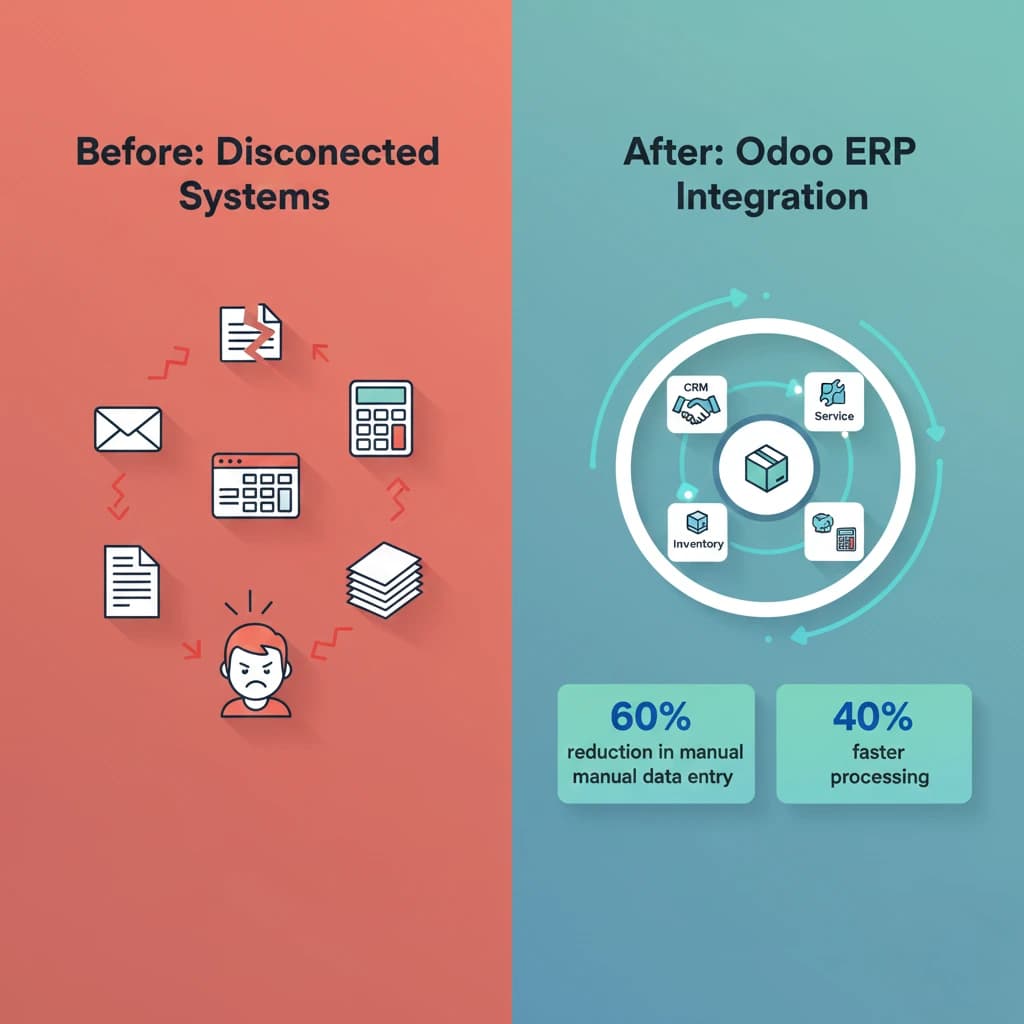
Odoo ERP for small business transforms how UAE SMEs manage operations by unifying customer relationship management with service delivery workflows. The platform's modular architecture allows businesses to start with essential CRM and service management functions, then expand capabilities as they grow. This integrated approach reduces manual data entry by up to 60%, improves service response times, and provides real-time visibility across all customer touchpoints and operational processes.
Understanding Odoo ERP for Small Business in the UAE Context
Why UAE SMEs Need Integrated ERP Systems
Small and medium enterprises in the UAE face unique operational challenges that traditional software cannot address. Managing customer inquiries through email while tracking service appointments in spreadsheets and handling invoices in separate accounting software creates information gaps that lead to missed opportunities and customer dissatisfaction. ERP for small and medium business solutions like Odoo consolidate these disconnected processes into one unified platform.
Dubai's competitive business landscape demands operational efficiency that only integrated systems can provide. When service technicians access real-time customer history and inventory availability through mobile devices, they resolve issues faster and improve first-time fix rates. The Odoo CRM module automatically captures all customer interactions—from initial inquiry to service completion—creating a complete view of customer relationships that drives better business decisions. According to recent industry research, businesses using integrated ERP software solutions report 40% faster order processing and 35% improvement in customer satisfaction scores.
The Modular Advantage of Odoo for Growing Businesses
Unlike enterprise ERP systems that require massive upfront investments, Odoo's modular structure lets small businesses start with core functionality and expand progressively. A service company might begin with CRM and project management, then add inventory management and accounting as operations grow. This flexibility makes Odoo implementation services accessible to businesses with limited budgets.
Each Odoo module integrates seamlessly with others, ensuring data flows automatically across departments. When sales teams close deals in the CRM, the service module immediately creates work orders, inventory systems allocate materials, and accounting prepares invoices, all without manual intervention. This automation reduces administrative overhead by 45-50%, allowing small teams to manage larger workloads without proportional staff increases.
Integrating CRM and Service Operations Through Odoo
How the Odoo CRM Module Captures Customer Intelligence
The Odoo CRM module goes beyond basic contact management to track every customer interaction across multiple channels. Sales pipelines visualize deal stages, automatic lead scoring prioritizes high-value opportunities, and integrated email campaigns nurture prospects through the sales cycle. For UAE businesses managing both B2B service contracts and retail customers, this comprehensive visibility proves invaluable.
Real-time dashboards show sales performance metrics, conversion rates, and revenue forecasts without requiring complex reporting tools. Sales managers identify bottlenecks in the pipeline and adjust strategies based on actual customer behavior data. The CRM automatically logs phone calls, emails, and meeting notes, creating institutional knowledge that protects businesses when team members change roles or leave the company.
Connecting Service Management to Customer Records
Service-oriented SMEs benefit most when field service operations connect directly to customer relationship data. Odoo's service management module links maintenance schedules, service tickets, and technician assignments to customer profiles in the CRM. When customers call about equipment issues, support teams instantly see service history, warranty status, and previous interaction notes.
This integration transforms service delivery efficiency. Technicians arrive at job sites with complete equipment histories, replacement part availability, and customer preferences already loaded on mobile devices. Service completion automatically triggers invoice generation, inventory updates, and follow-up communication workflows. Businesses using Odoo ERP for service-based SMEs report 30% reduction in average service resolution time and 25% increase in customer retention rates.
Automating Workflows Between Departments
Manual handoffs between sales, service, and accounting departments create delays and errors that frustrate customers. Odoo eliminates these friction points through automated workflow triggers. When service contracts approach renewal dates, the system automatically alerts sales teams and generates renewal quotes based on current pricing and service history.
Inventory management integrates with service operations to ensure parts availability before technicians schedule appointments. When stock levels fall below minimum thresholds, purchase orders generate automatically, preventing service delays due to material shortages. This end-to-end automation makes Odoo ERP for small business particularly valuable for companies operating with lean administrative teams.
Key Features That Drive Operational Efficiency
Real-Time Data Visibility Across All Touchpoints
Decision-makers in small businesses cannot wait for end-of-month reports to understand operational performance. Odoo provides real-time dashboards that display critical metrics across sales, service, inventory, and finance. Custom reports filter data by customer segment, service type, geographic region, or any other business dimension relevant to UAE market conditions.
This immediate visibility enables proactive management rather than reactive problem-solving. Service managers spot scheduling conflicts before they impact customer appointments. Sales directors identify underperforming products or services while there's still time to adjust quarterly strategies. Financial controllers monitor cash flow and accounts receivable daily, maintaining healthy working capital without constant manual reconciliation.
Mobile Access for Field Service Teams
UAE's service economy increasingly depends on field technicians who work outside traditional office environments. Odoo's mobile application gives these team members full access to customer information, work orders, inventory data, and communication tools from smartphones or tablets. Technicians update job status, capture customer signatures, record time spent, and photograph completed work—all syncing immediately to the central system.
This mobile capability eliminates the administrative burden of post-service paperwork. Service completion automatically triggers invoice generation, customer satisfaction surveys, and preventive maintenance scheduling for future appointments. Companies implementing mobile field service capabilities through custom Odoo development report 40% reduction in administrative time and 50% faster invoice processing.
Customization Without Coding Complexity
Small businesses have unique processes that reflect their competitive advantages and market positioning. Odoo accommodates these differences through extensive customization options that don't require programming expertise. The Studio module enables business users to modify forms, create custom fields, adjust workflows, and design reports using intuitive drag-and-drop interfaces.
For more complex requirements, Odoo's open-source architecture allows developers to create custom modules that extend core functionality. This flexibility means ERP for small and medium business implementations can match exact operational requirements rather than forcing companies to adapt processes to rigid software limitations.
Implementation Considerations for UAE SMEs
Planning Your Odoo Deployment Strategy with Odoo ERP for Small Business
Successful ERP implementations begin with thorough process analysis and clear objective definition. UAE businesses should identify their most critical operational pain points—whether that's customer communication gaps, service scheduling inefficiencies, or inventory management challenges. Prioritizing these issues guides module selection and implementation sequencing. Working with experienced Odoo consultation services ensures businesses avoid common implementation pitfalls and achieve faster time-to-value.
Data migration from existing systems requires careful planning to ensure accuracy and completeness. Customer records, product catalogs, pricing information, and transaction histories must transfer cleanly to the new platform. Testing data integrity before going live prevents operational disruptions and maintains customer service continuity during the transition period.
Training Teams for System Adoption
Technology investments in ERP for Small and Medium Business only deliver value when teams embrace new tools and change established workflows. Comprehensive training programs should cover both technical system operation and process improvements enabled by the integrated platform. Role-based training ensures sales staff master CRM features while service technicians focus on mobile work order management and inventory functions.
Ongoing support structures help teams navigate questions and challenges during the critical first months after implementation. Designating internal super-users who receive advanced training creates support resources within the organization. These champions assist colleagues, identify optimization opportunities, and serve as liaisons to implementation partners for system enhancements.
Measuring ROI and Business Impact
UAE SMEs investing in Odoo ERP for small business should establish clear metrics to track return on investment and operational improvements. Common success indicators include reduced order processing time, improved invoice collection periods, increased customer retention rates, and decreased administrative overhead as percentage of revenue.
Regular performance reviews compare actual results against baseline measurements taken before implementation. This data-driven approach validates investment decisions, identifies areas needing additional training or process refinement, and builds the business case for expanding to additional Odoo modules as the company grows.
Conclusion
Odoo ERP for small business delivers the integrated operational platform UAE SMEs need to compete effectively in today's demanding market environment. By unifying customer relationship management with service operations, inventory control, and financial processes, Odoo eliminates the data silos and manual workflows that limit small business growth. The platform's modular architecture, mobile capabilities, and customization options make it particularly suitable for service-oriented companies seeking operational efficiency without enterprise-level complexity.
UAE businesses ready to transform their operations through integrated ERP technology should partner with experienced implementation specialists who understand local market requirements and business practices. Codex ITNS brings deep Odoo expertise and comprehensive digital transformation capabilities to help small and medium enterprises maximize their technology investments and achieve sustainable competitive advantages.
Ready to integrate your CRM and service operations? Contact Codex ITNS today to discover how Odoo ERP can streamline your business processes and accelerate growth across the UAE market.
Related solution: Field Service and AMC Management Software explains how Codex handles this workflow for UAE businesses.
Planning AMC or field service operations? See how Codex connects service contracts, technician visits, renewals, spare parts, and invoicing in one Odoo workflow. Explore Field Service and AMC Management Software or talk to Codex for a guided consultation.
Frequently Asked Questions
1. What is Odoo ERP for small business?

Odoo ERP for small business is an integrated software platform that combines customer relationship management, inventory control, accounting, and service operations into one unified system. This modular solution allows UAE SMEs to start with essential functions and expand as they grow, eliminating data silos and automating workflows across departments.
2. How much does Odoo ERP cost for small businesses in UAE?
Odoo ERP pricing for small businesses varies based on the number of users, modules selected, and implementation complexity. UAE companies typically invest between AED 15,000-50,000 for initial implementation, with monthly user fees ranging from AED 100-300 per user. Odoo partners in Dubai can provide customized quotes based on specific business requirements.
3. What are the main benefits of ERP for small and medium businesses?
ERP for small and medium businesses delivers operational efficiency through automated workflows, real-time data visibility, and integrated processes. Businesses experience 40-60% reduction in manual data entry, improved inventory accuracy, faster order processing, and enhanced customer service through unified information access across all departments.
4. Can Odoo CRM module integrate with other business systems?
The Odoo CRM module integrates seamlessly with accounting, inventory, sales, and service management modules within the Odoo ecosystem. Additionally, custom development and system integrations enable connections to third-party applications like email platforms, payment gateways, shipping providers, and legacy systems through APIs.
5. Is Odoo suitable for service-based businesses in UAE?
Odoo excels for service-based businesses by connecting customer relationship management with field service operations, project management, and resource scheduling. The platform tracks service tickets, technician assignments, maintenance schedules, and customer communications in one system, improving response times and service quality for UAE service providers.
6. How long does Odoo implementation take for small businesses?
Odoo implementation for small businesses typically takes 6-12 weeks depending on complexity, number of modules, and data migration requirements. Post-go-live support and maintenance ensures smooth adoption, with most companies achieving full operational capability within 3-4 months of deployment.
7. What industries benefit most from Odoo ERP for small business?
Trading companies, manufacturing firms, service providers, retail chains, and construction businesses benefit significantly from Odoo's flexibility. The platform serves diverse sectors including optical stores, field service companies, and trading and manufacturing operations, adapting to industry-specific workflows through customization.
8. Does Odoo support Arabic language for UAE businesses?
Odoo fully supports Arabic language, right-to-left text orientation, and multi-currency operations essential for UAE businesses. The platform accommodates bilingual invoices, reports, and user interfaces, ensuring compliance with local business practices while maintaining international operational standards for companies serving diverse customer bases.
9. Can small businesses customize Odoo without technical expertise?
Odoo Studio enables business users to customize forms, reports, and workflows using drag-and-drop interfaces without coding knowledge. For advanced customizations, businesses can access Odoo's open-source framework through development partners who build custom modules matching specific operational requirements and competitive advantages.
10. What support is available after Odoo implementation?
Comprehensive support includes system maintenance, user training, performance optimization, and feature enhancements. UAE businesses receive ongoing assistance through dedicated support teams, regular system updates, and access to the global Odoo community for best practices and troubleshooting guidance.